
- Why boring service descriptions kill sales
Picture this: A guest opens your hotel's digital menu and sees "Relaxing massage 60 minutes with essential oils" followed by "Seven-course tasting menu by chef." They understand what's offered but feel nothing. No excitement, no desire, no compelling reason to book.
Meanwhile, that same guest just spent their evening scrolling through Netflix's perfectly curated recommendations and ordering dinner through an app that somehow knew they wanted Thai food before they did. Modern travelers expect the same level of thoughtfulness and personalization from hotels.
The solution is about transforming how you present services. Instead of "Relaxing massage 60 minutes with essential oils," you could write "An hour when the world disappears. Warm stones melt tension from your shoulders while lavender oils quiet your mind. You'll emerge feeling like you've had a full night's sleep." The service is identical, but the second version sells an experience rather than a transaction.
2. The psychology of effective service presentation
Guests don't buy services, they buy feelings, experiences, and solutions to problems they didn't even know they had. Here's how to apply this principle:
Replace feature lists with sensory experiences
Before:
"Late checkout available"
"Business center services"
After:
"Extra time to savor the luxury: sleep until your body naturally wakes, then ease into departure at your own pace"
"Command center for getting things done: high-speed printing, quiet phone booths for important calls, and coffee that keeps you sharp"
Address emotional needs directly
Before:
"Late checkout available"
"Business center services"
After:
"Extra time to savor the luxury: sleep until your body naturally wakes, then ease into departure at your own pace"
"Command center for getting things done: high-speed printing, quiet phone booths for important calls, and coffee that keeps you sharp"
Smart hotels understand that every word in their digital menu is a sales tool. The difference between "continental breakfast" and "morning fuel for your city adventure" might seem subtle, but one sells sustenance while the other sells possibility. Some platforms like Hoop allow hotels to test different descriptions and see which versions actually convert better, turning gut feelings into data-driven decisions.
3. Creating experiences that sell themselves
The transformation happens when you stop describing what you do and start painting pictures of what guests will feel. Here are practical examples you can adapt:
Spa services transformations
"Spa package with massage and facial" becomes:
"Complete reset: Two hours where your only job is breathing while expert hands erase stress from your shoulders and restore the glow that makes you look like the vacation version of yourself"
"Couples massage" becomes:
"Synchronized relaxation: Side by side, you'll both float away from the world, emerging refreshed and reconnected"
"Complete reset: Two hours where your only job is breathing while expert hands erase stress from your shoulders and restore the glow that makes you look like the vacation version of yourself"
"Couples massage" becomes:
"Synchronized relaxation: Side by side, you'll both float away from the world, emerging refreshed and reconnected"
Dining experience makeovers
"Wine tasting with sommelier" transforms into:
"Liquid stories: Each glass carries decades of sun-soaked hillsides and passionate winemakers. You'll leave knowing which wines make you feel confident at dinner parties"
"Chef's tasting menu" becomes:
"Culinary theater: Seven acts of flavor, each course arriving like a perfectly timed surprise that builds to an unforgettable finale"
"Liquid stories: Each glass carries decades of sun-soaked hillsides and passionate winemakers. You'll leave knowing which wines make you feel confident at dinner parties"
"Chef's tasting menu" becomes:
"Culinary theater: Seven acts of flavor, each course arriving like a perfectly timed surprise that builds to an unforgettable finale"
Activity descriptions that inspire
"City tour available" becomes:
"Insider's secret route: Skip the tourist traps and discover the hidden gems locals actually love"
"Pool access" transforms into:
"Your private oasis: Crystal-clear water that feels like silk, loungers positioned for perfect sun, and drinks that appear exactly when you didn't know you wanted them"
"Insider's secret route: Skip the tourist traps and discover the hidden gems locals actually love"
"Pool access" transforms into:
"Your private oasis: Crystal-clear water that feels like silk, loungers positioned for perfect sun, and drinks that appear exactly when you didn't know you wanted them"
These descriptions work because they activate multiple senses and emotions simultaneously. Guests can imagine the weight lifting from their shoulders, picture themselves looking radiant, or envision confidently selecting wine at future dinners. The price becomes irrelevant when the experience feels invaluable.
4. Building irresistible experience packages
Individual services are transactions, but themed experiences become memories worth paying for. Here's how to create packages that guests actually want to book:
"The productivity powerhouse" (for business travelers)
- Express breakfast delivered to room by 6 AM
- Meeting room with presentation setup
- Midday energy boost: premium coffee and healthy snacks
- End-of-day decompression massage
- Late checkout for post-meeting recovery
Position this as: "Everything you need to dominate your business day, then recover like the executive you are"
"The night owl's paradise" (for late sleepers)
- Breakfast served until 2 PM
- Blackout curtains and white noise machines
- Evening spa appointments starting at 9 PM
- Late-night room service with comfort foods
- Checkout flexibility until 3 PM
Market it as: "For those who live on their own time zone—luxury that adapts to your rhythm"
"The explorer's base camp" (for adventure seekers)
- Early morning coffee and grab-and-go breakfast
- Gear rental coordination
- Energy-packed lunch to take along
- Post-adventure recovery: hot shower amenities and muscle-soothing treatments
- Celebration dinner with local specialties
Present as: "Fuel your adventures, then celebrate them properly"
"The romance reset" (for couples)
- Private check-in to avoid crowds
- Champagne and strawberries on arrival
- Couples spa treatment
- Private dining setup
- Late checkout with breakfast in bed
Frame as: "Rediscover each other without the world interrupting"
The genius lies in recognizing that guests don't just want convenience; they want to feel understood. When your packages acknowledge their specific lifestyle or travel purpose, pricing becomes secondary to the feeling that this hotel truly gets them. Creating these themed experiences becomes straightforward with modern platforms, for instance, Hoop's content management system lets hotels easily build and modify service bundles, then automatically coordinates notifications across departments when guests book complete experiences.
5. Personalization that feels like mind reading
The most effective digital menus curate experiences based on subtle signals and preferences.
Send these questions in your booking confirmation email:
- "Are you an early bird or night owl?"
- "Business trip or pleasure travel?"
- "Adventure seeker or relaxation focused?"
- "Celebrating anything special?"
- "Any dietary preferences or restrictions?"
Personalized menu adaptations based on responses
1. For early birds + business travelers:
- Coffee service starting at 5:30 AM
- Express breakfast options under 15 minutes
- Meeting room bookings with tech support
- Power lunch delivery
- Quick grooming services
2. For night owls + couples:
- Breakfast available until 3 PM
- Romantic dinner reservations after 8 PM
- Late-night room service
- Couple's spa treatments in evening slots
- Late checkout options
3. For families + adventure seekers:
- Kid-friendly activity packages
- Family-style dining options
- Gear rental and local attraction tickets
- Energy-boost snacks for outings
- Flexible meal timing
4. For solo travelers + relaxation focused:
- Single spa treatments and quiet spaces
- Book a table for one without awkwardness
- Self-care packages
- Peaceful zones and meditation options
- Solo-friendly local recommendations
This level of personalization increases conversion rates significantly because guests only see relevant options. Instead of scrolling through dozens of services that don't match their needs, they find a curated selection that feels hand-picked for their specific situation.
The technology to enable this personalization is becoming more accessible. Hoop, for example, captures guest preference data and analyzes patterns across multiple stays, building increasingly sophisticated profiles that enable deeper personalization with each visit. Hotels report that personalized menus increase additional service bookings by up to 34% compared to generic offerings.
6. Speaking your guests' language
Modern travelers, especially younger demographics, respond to authentic, contemporary language that reflects how they actually communicate.
Replace formal hotel language with human language
Formal:
"Rejuvenating wellness treatments"
"Culinary excellence"
"Luxurious accommodations"
"Premium beverage selection"
Human:
"Self-care that actually works"
"Food that ruins you for everywhere else"
"The kind of bed you'll dream about when you're back home"
"Drinks that make you feel fancy"
Use contemporary phrases that guests actually say
- "Main character energy spa day" instead of "Comprehensive wellness package"
- "No drama, just relaxation zone" instead of "Quiet relaxation area"
- "Fuel for your adventures" instead of "Nutritious breakfast options"
- "Instagram views" instead of "Scenic vistas"
Match your language to guest demographics
For digital nomads and younger travelers:
- "WiFi that won't betray you during important calls"
- "Coffee strong enough to fuel world domination"
- "Workspace that sparks creativity"
For business travelers:
- "Chaos-proof dining options"
- "Nap-worthy quiet zones"
- "Energy-burning activities for tiny humans"
For business travelers:
- "Meetings that don't feel like meetings"
- "Power breakfast that powers actual power"
- "Stress-melting end-of-day treatments"
This approach works because it breaks down the artificial barrier between hotel language and human language. When guests read service descriptions that sound like recommendations from a trusted friend rather than marketing copy, they're more likely to book.
Social media has trained guests to share experiences that feel authentic and unique. Service names that use contemporary language are more likely to appear in guest social posts, creating organic marketing that traditional descriptions simply don't inspire.
7. Making it work with technology
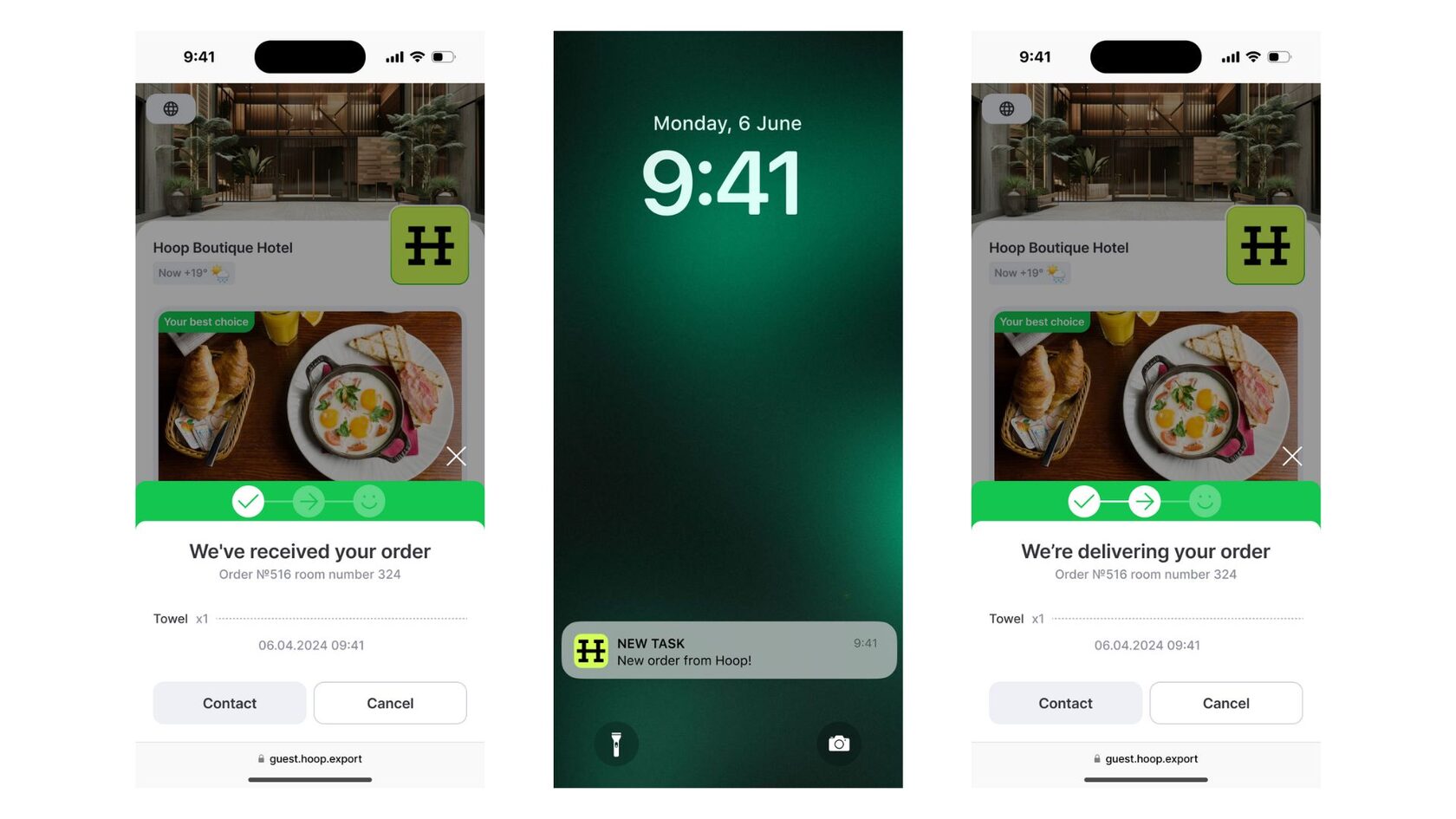
The most brilliantly written menu descriptions mean nothing if guests can't easily find, customize, and book services. This is where platforms like Hoop transform good ideas into revenue reality.
Smart digital menus adapt in real-time based on occupancy, weather, and guest behavior. When unexpected rain hits, the system can automatically promote "cozy day packages" featuring indoor activities, hot beverage service, and spa treatments. During low-occupancy periods, exclusive experiences can appear to create demand and maximize revenue from available guests.
The technology should feel invisible to guests while providing powerful insights to hotel managers. Which descriptions generate the most bookings? What packages have the highest profit margins? When do guests typically book additional services? Modern platforms track metrics like average order value, most frequently ordered items, processing times, and guest feedback ratings. This data enables continuous optimization, turning your digital menu into an always-improving revenue engine.
Staff training becomes crucial for delivery. When your menu promises experiences rather than just services, your team needs to understand and embrace this elevated approach. A "liquid stories" wine tasting requires different preparation and presentation than a standard wine flight. The good news is that staff often feel more engaged and proud when they're creating memorable experiences rather than just delivering transactions.
The revenue reality
Hotels implementing optimized digital menus see measurable results quickly. Beyond the immediate revenue increase, several secondary benefits emerge. Guest satisfaction scores improve because expectations align better with experiences. Repeat booking rates increase because memorable experiences create stronger emotional connections than standard services.
Perhaps most importantly, optimized digital menus change how guests perceive value. When services feel like curated experiences rather than add-on purchases, guests become less price-sensitive and more experience-focused. This shift enables premium pricing strategies that boost both revenue and brand positioning.
The investment required is minimal compared to physical renovations or major operational changes. Most hotels can implement these strategies using existing staff and systems, with modern digital platforms providing the technological foundation for optimization and personalization.